
You may have heard or read about El Niño in a weather report. El Niño causes changes in weather. But what is El Niño?
To answer this, first we have to talk about what happens normally. Strong winds blow across the Pacific Ocean from east to west along the equator. The equator is an imaginary line that divides Earth into the northern and southern halves. The winds cause warm surface water to pile up on the western side of the Pacific Ocean. Your teacher may have modeled this for your class. A fan at high speed is placed on one side of a large bowl filled with water. The air current from the fan blows across the water. This causes water to pile up on the opposite side of the bowl.
What’s happening on the eastern side of the Pacific Ocean as water is pushed to the west? That water has to be replaced. Cold water from below the surface rises to the surface.
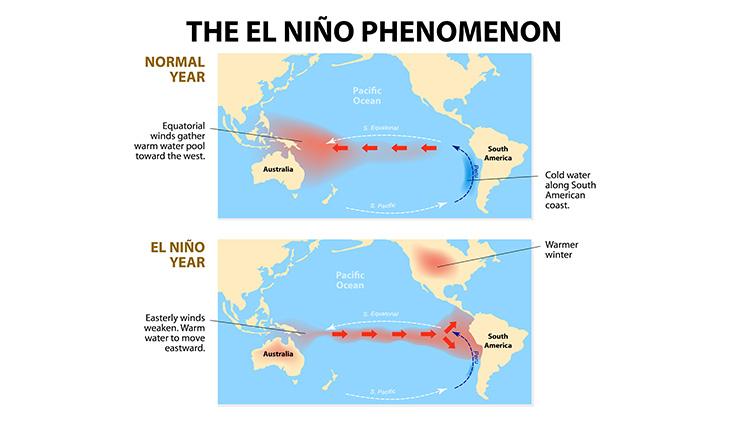
So, how do things change during an El Niño event? The winds that blow across the Pacific Ocean weaken. This would be like turning the fan down from high speed to low speed. The water in the tub that was pushed to the opposite side will move back. The same thing happens in the Pacific Ocean. The warm water in the west moves back to the eastern side.
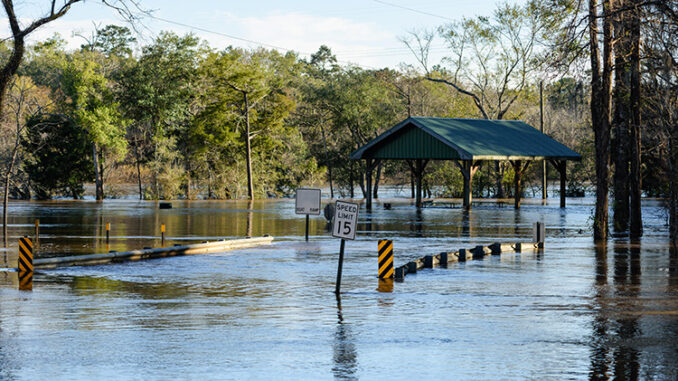
During El Niño events, the northern U.S. has warmer, drier winters. The southern U.S. gets more rain and more flooding.
What Do You Think? Scientists can predict when an El Niño will happen. How does this help people prepare for the changes in weather that El Niño causes?
Photo Credit: (t)Designua/Shutterstock, (b)Terry Kelly/Alamy Stock Photo