

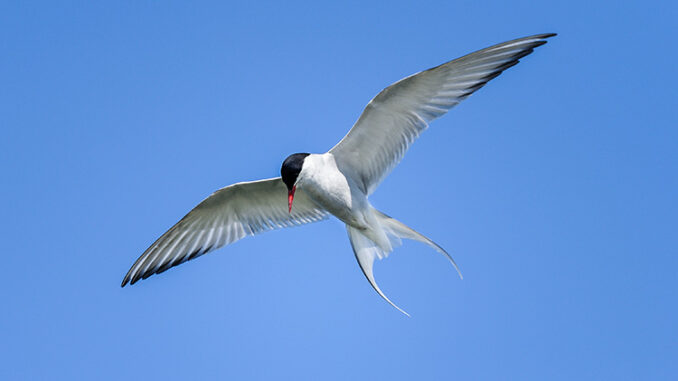
A migration is the seasonal movement of a group of animals from one place to another. Which animal holds the record for longest migration? The arctic tern. These birds fly up to 96,000 km (almost 60,000 miles) per year! Arctic terns live up to 30 years. It a tern’s lifetime, it could fly over 2,800,000 km! That’s like an astronaut going from the Earth to the Moon and back three times. No astronaut has done this yet.
Where are the terns going? They fly from the Arctic to Antarctica and back every year. They spend the summer laying eggs and raising baby birds in the Arctic. The birds begin their journey to Antarctica in late August or early September.
It takes them a few months to reach Antarctica. They spend the summer there, again. Remember that summer in the southern hemisphere is from December to March. The birds take off for the Arctic in April. They reach the Arctic by May or June.
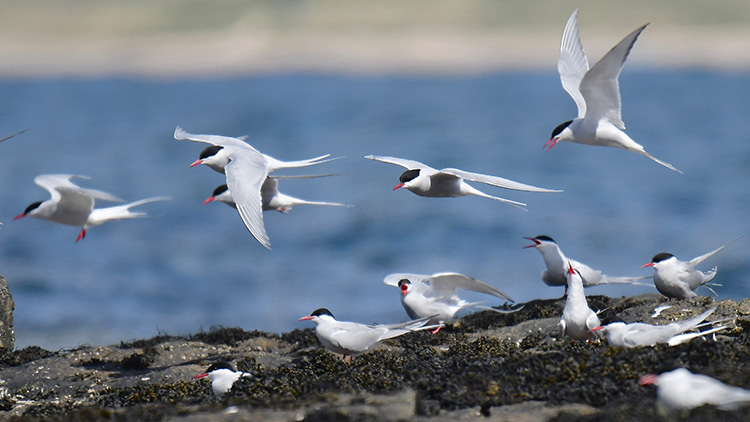
Just like any long-distance traveler, the terns make stops along the way. One stop is in the North Atlantic Ocean. The water here is full of fish and other marine life that terns feed on. This gives them the energy they need to keep flying south.
Once the birds reach Antarctica, they spend the summer feeding on fish and small, shrimp-like living things. When the birds are ready to fly north, they use the wind to travel faster. The flight north takes less time than the flight south.
What Do You Think? Why is it important for birds to have places to stop during migration?
Photo Credit: (t)hakoar/iStock/Getty Images, (b)F.Demonsant/Shutterstock