
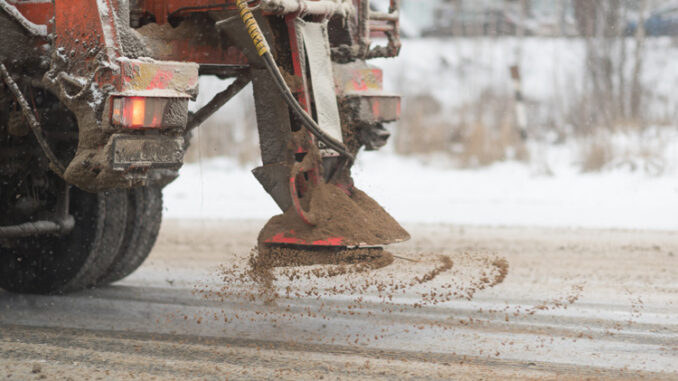
The weather forecast for the morning is not great. It is a mix of freezing rain and snow. Meteorologists are telling drivers to be careful. Roads will be slippery. Is there any way to make the roads safer? Yes. Trucks will be out spreading salt on the roads. How does this help?
Salt lowers the freezing point of water. As salt dissolves in water, it releases ions (atoms that have a positive or negative charge). The ions make it harder for water molecules to form ice. For example, the freezing point of fresh water is 32°F. The freezing point of a 10 percent saltwater mix is 20°F.
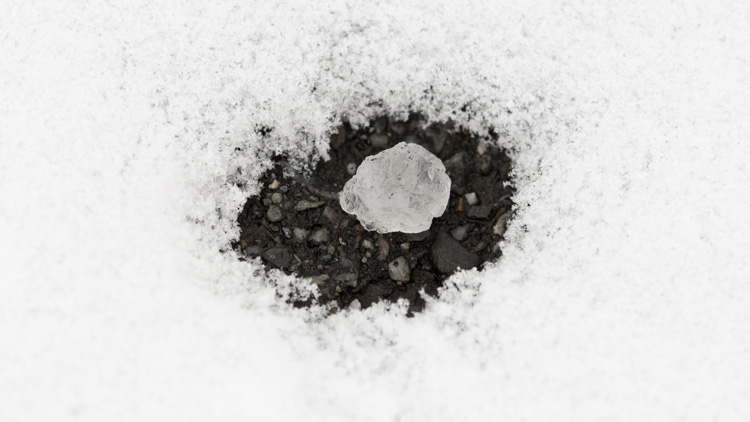
Cities and towns have been spreading salt on roads for decades. It works, but it can have negative effects. Salt can slowly wear away cars, roads, and bridges. It also enters ecosystems (all the living and nonliving things in an area). Extra salt in ecosystems can harm plants and animals.
What can be used in place of salt? One answer is pavement that allows water to soak into it. The water does not collect and freeze on top of it. This reduces the need for salt. Some cities use a mix of salt and sand. The sand helps cars stop faster. So, less salt is needed.
What Do You Think? What does your town do when roads are slippery?
Photo Credit: (t)MakDill/Shutterstock, (b)RShepHorse/iStock/Getty Images