

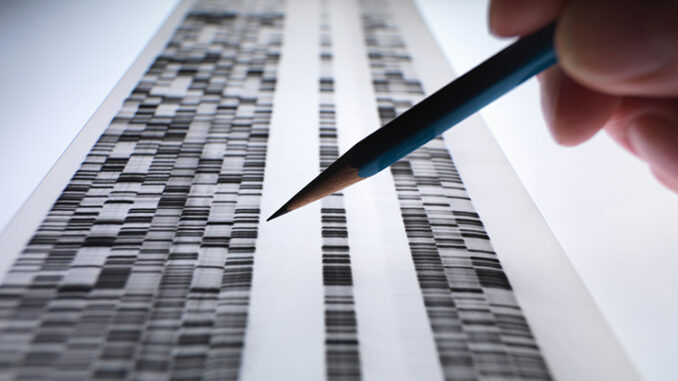
Twenty-five years ago, on February 15, 2001, scientists made a big breakthrough. They had mapped almost all human genes in order. These scientists were working on the Human Genome Project.
Genes carry information about a person’s traits. Traits like hair color and eye color. The information in genes also affects health. For example, you, or someone you know, may get a stomachache after drinking cow milk. Some people cannot digest (break down food into smaller pieces) the natural sugar in the milk. This is due to genes.
Illness also happens because of genes. For example, a change to one gene changes the shape of cells (the basic unit of all living things) that carry oxygen to the body. The cells do not work correctly. They may not bring enough oxygen to the body.
How is this related to the Human Genome Project? Understanding more about human genes helps scientists find treatments (something that helps an organism that is sick or hurt get better) for illnesses.
In one type of treatment, genes that cause an illness can be fixed. They can be fixed so they have the correct information. This has been used to fix genes that change the shape of cells that carry oxygen to the body. The cells work correctly after the treatment. People with this illness feel better after the treatment.
What Can You Do? What questions do you have about genes?
Photo Credit: Rafe Swan/Image Source/Alamy Stock Photo