

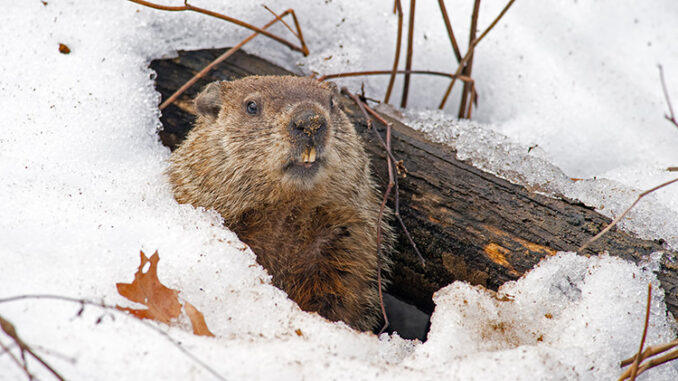
It’s February 2nd. Groundhog Day! Famous groundhogs, such as Punxsutawney Phil and Buckeye Chuck, are woken up from their winter sleep. Will they see their shadows? Will spring come early? Or will there be six more weeks of winter? Punxsutawney Phil is right less than half the time.
During winter, from about November to late February or March, groundhogs hibernate (spend the winter sleeping in a den or burrow). In winter, temperatures are below freezing. The ground is covered in snow. There is less food for animals. Hibernation helps animals survive these conditions.
During hibernation, an animal’s metabolism (processes that turn food into energy) slows down. Its heart rate slows down. A groundhog’s heart rate can go from 80 beats per minute to as low as 5 beats per minute. Body temperature also decreases during hibernation. A groundhog’s normal body temperature is around 99°F. When hibernating, a groundhog’s body temperature can decrease to 37°F. That’s almost freezing!
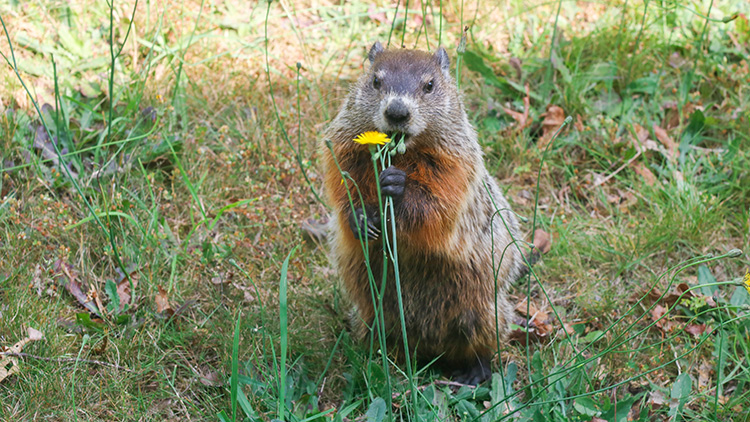
When hibernating, groundhogs spend their time sleeping. They lose some weight. In the spring, groundhogs come out of their burrows (a hole in the ground that animals live in). They eat lots of food.
Groundhogs are omnivores. Most of their diet is grass, tree leaves, and bark. They also eat flowers and berries. Sometimes, they eat insects, eggs, and small birds. In the spring and summer, they eat a lot of food. They gain back the weight they lost. They are ready to hibernate again in November.
What Do You Think? What other animals are less active during winter?
Photo Credit: (t)Brian E Kushner/Shutterstock, (b)Vincent Alvino/Shutterstock